lundi 15 juillet 2019

Quand l'ONU dédouane puis accuse quand même.. (Srebrenica)

à (re)lire aussi :

Enjeux géopolitiques et économiques au Kosovo (rapport Collectif pour la Paix au Kosovo-Métochie 10/2007) 

https://zoonpolitikon2.blogspot.com/2008/04/enjeux-gopolitiques-et-conomiques-au.html


=====

Yves Bataille :
https://www.facebook.com/profile.php?id=100009140182723
Documentation et témoignages abondent. L’Armée de la Republika Srpska (VRS) est entrée dans l’enclave avec seulement 200 hommes et 4 blindés. Elle n’a pas rencontré de résistance. Les morts de Srebrenica ne sont pas le résultat d’un massacre organisé comme l’a prétendu l’administration états-unienne mais proviennent de la colonne mixte de la 28ème Division de l’Armija Bosniaque, qui devait tenter une percée en direction des lignes musulmanes et... la réussir en partie puisque les Serbes devaient la laisser passer. C’est dans cette colonne d’environ 12.000 à 15.000 individus dont au moins 6.000 armés, que des pertes furent occasionnées dans des combats classiques avec des individus qui n’avaient pas rendu les armes, ce qui dans le droit de la guerre constitue une cible légitime.
LE MONTAGE DE SREBRENICA !
Il a consisté à inventer un massacre de masse en imputant aux Serbes une tuerie collective de civils. En réalité les gens morts après la chute de l'enclave étaient tous des combattants islamistes armés soutenus par les Américains et leurs complices occidentaux.
- Pour faire du chiffre, on a additionné ceux qui étaient morts dans les combats antérieurs à la chute de l'enclave et ceux qui devaient être tués les armes à la main lors de la rupture du blocus. 12 à 15.000 mudjahidine armés par les Américains, avec un nombre indéterminé de civils dans la retraite, avaient en effet tenté de passer les lignes serbes pour gagner la zone musulmane. C'est au sein de ce groupe (le 28 ème division de l'Armija du Frère Musulman Izetbegovic), qu'il y a eu des tués. Les chiffres avancés depuis le début du lancement de cette affaire sont faux. Ici on parle de 6000 tués alors qu'ailleurs ils disent 8000. Malgré un accord de délimitarisation, l'enclave terroriste était alimentée en permanence en armes par des avions de l'OTAN qui parachutait de nuit le matériel. Quelques jours avant la chute de l'enclave, le chef militaire des lieux, Nacer Oric, avait été évacué en hélcoptère vers Sarajevo. La chute de l'enclave fut prévue d'un commun accord entre Izetbegovic et Clinton : il s'agissait de provoquer un choc médiatisé pour incriminer les Serbes et les bombarder. La republika Srpska (Serbes de Bosnie) devait être bombardée en 1995 bien avant la Serbie (République de Serbie/Belgrade) qui le fut en 1999... »

« Je suis un citoyen français ayant décidé en 1993 de m’installer en Serbie pour mener la lutte d’indépendance nationale et continentale à partir de l’Est de l’Europe. Le fait que ma femme soit serbe n’est pas la cause de mon engagement du côté des Serbes mais en est plutôt une conséquence. Je précise cela parce que cette affirmation revient souvent chez des gens qui ne me connaissent pas. J’ai vécu une partie de la guerre yougoslave comme les bombardements de l’OTAN en 1999, vu de près certains évènements de Bosnie et du Kosovo. Je puis donc témoigner de ces faits en connaissance de cause et les mettre en perspective pour leur donner un sens. Ainsi, la guerre yougoslave n’a été ni une guerre ethnique ni une guerre religieuse comme on le prétend, mais la première phase des « guerres humanitaires » du monde unipolaire consécutif à la fin de l’Union Soviétique et leur « laboratoire ».
Comment avez-vous été contacté par la défense de Radovan Karadžić, comment vous connaissaient-ils et que pensaient-ils que vous puissiez apporter au dossier ?
Le cercle qui défend Radovan Karadžićà Belgrade et à Banja Luka me connaissait. Cela date de la guerre en Bosnie. Quand Radovan Karadzic a été déporté à La Haye j’ai dit que j’étais prêt à témoigner en sa faveur s’il le désirait et quand son avocat, maître Robertson, me l’a demandé, j’ai aussitôt accepté. Une semaine après la chute de l’enclave de Srebrenica, je me trouvais en effet dans le bureau de Karadžić à Pale, à ce moment-là capitale de la Republika Srpska, près de Sarajevo. Ce jour-là, Karadžić a reçu devant moi un fax en provenance de l’enclave musulmane indiquant que l’évacuation des populations civiles s’était déroulée correctement. Portant en-tête et tampon des Nations Unies, la télécopie était signée des trois parties alors en présence, le représentant musulman de la ville, le négociateur serbe et un responsable de l’ONU. Quand je suis allé à Paris quelques jours plus tard, j’ai publié ce document dans un hebdomadaire national avec un commentaire au moment-même où commençait le tohu-bohu médiatique sur le « massacre de Srebrenica ». Ce document devait être porté au dossier de la défense et servir de base à mon témoignage.
Comment est le TPIY de l’intérieur?
Sinistre. Entouré de grilles. Avec des sas de sécurité et des gardes armés. Scheveningen est le port de La Haye, sa partie côtière. J’ai été conduit dans l’enceinte du tribunal par un véhicule de l’ONU. Le témoin attend dans une petite pièce puis est conduit dans la salle d’audience. On peut voir cette salle dans les vidéos du tribunal. Ce dernier se trouve dans une zone d’organismes internationaux comme l'Organisation pour l'Interdiction des Armes Chimiques(OIAC), le World Forum et d’autres organismes de la « gouvernance mondiale ». Centre de détention pour les résistants hollandais pendant l’occupation allemande, la prison de Scheveningen, elle, est située à la périphérie de la ville. Au passage on peut remarquer que Maëstricht et Bilderberg se trouvent aussi en Hollande. Le groupe de Bilderberg fut créé naguère à l’hôtel du même nom dans la localité d’Oosterbeek. Entre la Grande-Bretagne et l’Allemagne, ce pays protestant et maritime semble avoir été conduit à jouer un rôle privilégié dans le projet mondialiste.
En France, de nombreuses voix se sont élevées pour dénoncer l’aspect non légal (d’un point de vue juridique) de ce TPI et surtout de ses méthodes de fonctionnement : l’édiction de ses propres décrets de fonctionnement, son financement par des pays n’étant pas des démocraties ou encore le fait que des témoins anonymes aient le droit de s’exprimer. Quelle est votre opinion à ce sujet ?
Financement par des sociétés commerciales, travail avec des ONG, règles mouvantes, anonymat de certains témoins, listes d’accusés secrètes et évolutives, utilisation de juges en provenance d’entités comme Trinidad ou les Sovereign base Areas of Cyprus, ce tribunal international est une mascarade. Conseiller à la cour s’appel de la République Française, mon père me disait que ce machin imprégné de juridisme anglo-saxon était une aberration.
Ce tribunal c’est la parodie de Nuremberg, le procès sans cesse renouvelé du général Tōjō. Dans la guerre américaine, après la diplomatie coercitive, les embargos, les bombardements et les invasions, Moloch expose et « juge » ses victimes. Reposant sur les normes juridiques des Bahamas ou des îles Caïmans, le Tribunal Pénal International pour la Yougoslavie (TPIY) prétend rendre la justice au nom d’une « communauté internationale » qui agirait au nom du monde mais il ne sert en fait qu’à assurer la défense du globalisme anglo-saxon. Cette institution permet à une oligarchie mondialiste d’user et d’abuser du « droit d’ingérence » (le « devoir d’ingérence » de Kouchner) baptisé aujourd’hui « R2P », la soi disant « Responsabilité de Protéger » qui n’est rien d’autre que le droit de tuer. De tuer par la « guerre humanitaire ».
La Yougoslavie a servi de laboratoire à cette guerre du Nouvel Age, aussi sanglante sinon plus que les précédentes, celles qui ne se cachaient pas encore derrière un masque humanitaire. Avec l’appui de la presse et d’ONG ad hoc, cet artifice permet de présenter des agressions comme des sauvetages, de diaboliser des dirigeants, de bombarder des peuples, de détruire les derniers pays indépendants et souverains. On l’a vu récemment en Libye et on le voit actuellement en Syrie, les Etats qui gênent l’irréductible marche globaliste sont attaqués les uns après les autres au nom du droit et de la morale. Insatiable, le nouveau Moloch s’attaquera tôt ou tard à la Russie.
Dans la « souveraineté limitée post-westphalienne » ce système nie la souveraineté des Etats pour étendre la dictature du Marché en arguant d’intentions démocratiques et de grandes idées morales comme le mariage pour tous… Dans ce dispositif, l’OTAN fait fonction de société de gardiennage et le Tribunal de La Haye devient le nouveau Sanhédrin. Sous l’influence des amis de Morton Abramowitz et de George Soros, les cercles mondialistes ont mis sur pied la CPI, la Cour Pénale Internationale, dite aussi « Statut de Rome », dont le siège, à l’instar du TPIY, a été installé à La Haye.
Sous la direction des prêtres de la nouvelle religion, les Etats-Unis ont forcé les Etats de la banlieue new-yorkaise à adhérer au « Statut de Rome » mais eux-mêmes ont refusé d’y adhérer. Plus exactement Bush a retiré la signature de Clinton qui ne l’avait tout de même pas ratifié, ce qui fait que les Etats-Unis peuvent accuser les autres en commettant les pires crimes de guerre sans en être accusés eux-mêmes. A la fois juge et partie, au-dessus de tout, la « nation indispensable » de Madeleine Albright ne saurait en effet être jugée…
Comment s’est déroulée votre audience et qu’est ce que vous y avez dit ?
Radovan Karadzic est accusé de crimes de guerre et de génocide pour le« massacre de 8.000 Musulmans dans l’enclave de Srebrenica ». Accusé aussi de bombardements à Sarajevo et de la prise en otage de 200 Casques bleus et observateurs de l’ONU en mai et juin 1995. On le rend responsable de tous les actes et incidents de la guerre comme si une guerre, quelle qu’elle soit, ne faisait ni dégâts ni victimes. En outre, on sait qu’une partie de ces Casques bleus avaient, si je puis dire, un double casque, celui de l’ONU et celui de Forces Spéciales. Activée par les Etats-Unis derrière le Frère Musulman Alija Izetbegovic, la partie bosniaque dite « musulmane » (Tito avait créé une « nationalité musulmane ») est présentée comme « victime ». Les exactions de l’Armija bosniaque et des moudjahidine afghans importés des pays arabes (comme aujourd’hui en Syrie) sont passées sous silence. Sur la terre de leurs ancêtres envahie par l’Empire Ottoman, les indigènes serbes orthodoxes de Karadzic se sont vus interdire le droit de se défendre.
Documentation et témoignages abondent. L’Armée de la Republika Srpska (VRS) est entrée dans l’enclave avec seulement 200 hommes et 4 blindés. Elle n’a pas rencontré de résistance. Les morts de Srebrenica ne sont pas le résultat d’un massacre organisé comme l’a prétendu l’administration états-unienne mais proviennent de la colonne mixte de la 28ème Division de l’Armija Bosniaque, qui devait tenter une percée en direction des lignes musulmanes et la réussir en partie puisque les Serbes devaient la laisser passer. C’est dans cette colonne d’environ 12.000 à 15.000 individus dont au moins 6.000 armés, que des pertes furent occasionnées dans des combats classiques avec des individus qui n’avaient pas rendu les armes, ce qui dans le droit de la guerre constitue une cible légitime.
Je suis intervenu après Vojislav Šešelj, qui était lui-aussi témoin de la défense. La procureure a essayé de me piéger, de faire diversion par des questions sans intérêt ou carrément débiles pour m’empêcher d’aborder le fond mais j’ai pu quand même tenir une sorte de réquisitoire.
Durant une heure et demie, le jeu des questions/réponses m’a permis de dénoncer la nature du tribunal et de réaffirmer des positions qui ne changent pas. Mes notes sur un calepin (la transcription originale est beaucoup plus longue) :
Scheveningen. Haski tribunal - Tribunal de La Haye. Réquisitoire contre l'Inquisition atlantiste et défense offensive du héros serbe Radovan Karadzic. La procureure, croyant me gêner : «Pour vous monsieur Karadzic est un héros serbe ? », J'ai répondu « Oui ! ». Comme Vojislav Šešelj. Car la procureure m'a reproché aussi d'être « un ami de Šešelj ». A la remarque provocatrice « Vous fréquentez des criminels de guerre », j'ai répondu : « Oui ..., d'ailleurs tous les Serbes sont des criminels de guerre et peut être même que j'en suis un moi-même ». La procureure m'a demandé bêtement si j'étais nationaliste et j'ai répondu « Oui ! » tout en faisant remarquer que le terme ne voulait rien dire sans en définir le contenu. Citant le passage d'un de mes articles, la même m'a reproché d'avoir écrit que le tribunal était une émanation du groupe Soros et des cercles globalistes. Je l'ai remerciée pour m'avoir cité, ajoutant que je persistais et signais sans enlever une seule virgule à ce que j'avais écrit. Je n'ai pas l'habitude d'écrire le contraire entre deux articles. Cela c'était pour les questions idiotes (un petit échantillon). Au président qui voulait m'interdire de poser des questions à la procureur(e), j'ai répondu que désormais mes questions seraient des remarques.
Mon réquisitoire contre l'Inquisition a porté sur l'agression américano-occidentale contre la Serbie et son mode opératoire. Sur le laboratoire yougoslave des guerres ultérieures comme on a pu le voir en Libye et en Syrie. J'avais apporté un document officiel de l'ONU signé par les trois parties du conflit bosniaque (Musulmans, Serbes et Casques bleus) portant le cachet de l'ONU, daté du 17 juillet 1995 et infirmant les accusations d'assassinats collectifs et de crimes de guerres imputés à la partie serbe à Srebrenica. La procureure a alors sorti un autre document daté d'une semaine après et qui ne figurait pas dans les pièces de la défense. Procédé illégal, même dans le cadre du TPIY, et piteuse diversion qui n'a convaincu personne: la courte lettre sans intérêt d'un fonctionnaire de l'ONU chargé de donner le change et récusant l'évaluation onusienne de la semaine précédente. Ridicule, je l'ai martelé comme j'ai dit que ce tribunal et la CPI (Cour Pénale Internationale) n'étaient que les structures mondialistes de l'impérialisme et de son bras armé, l'OTAN.
Radovan Karadzic a été acquitté en juin dernier des accusations de génocide dans certaines municipalités bosniennes en 1992… Imaginez vous qu'il puisse être libéré s’il s’avère vraiment qu’il est innocent des charges retenues contre lui dans les 10 autres chefs d’accusations restants ?
Comme les autres, en particulier Vojislav Seselj qui attend son « jugement » depuis 10 ans (!), les prisonniers politiques serbes sont à La Haye pour s’être opposés à la marche de l’Empire. Leur « crime » est d’avoir osé lui résister. Nous ne sommes pas dans le domaine de la justice et il ne faut pas attendre de jugement classique et serein. Seselj peut tout aussi bien être libéré en octobre après son jugement ou bien rester en prison jusqu’à la fin de ses jours. Tout dépendra des ordres des tireurs de ficelle, les mêmes qui ont libéré des Croates et des Albanais après un passage par Scheveningen. Ce tribunal est fait pour condamner les Serbes. Pour dissuader, la Bête a toujours besoin de tenir dans sa gueule une offrande expiatoire.
Vous vivez en Serbie ou vous êtes analyste politique, quel regard portez vous sur la situation actuelle et depuis l’élection du nouveau président et du nouveau gouvernement ?
Le nouveau gouvernement n’a pas plus d’indépendance que son prédécesseur. Les hommes changent mais le système demeure. Les « progressistes » de Tomislav Nikolic sont même allés plus loin que les « démocrates » de Boris Tadic dans l’allégeance à Bruxelles et à Washington. Ayant trahi leur ancien parti, le Parti radical, a poignardé dans le dos leur chef et son fondateur emprisonné depuis 10 ans à Scheveningen, la nouvelle équipe s’est enfoncée dans la collaboration et le renoncement. Avec le Parti socialiste d’Ivica Dacic qui dispose d’importants ministères, elle a pratiquement reconnu l’indépendance du Kosovo et se met en quatre pour satisfaire les exigences de la « gouvernance mondiale ». Mais la bonne entente avec l’ennemi ne change pas les rapports de force. Guidé par des mouvements comme Dveri, le courant politique qui refuse la corruption et la collaboration avec l’ennemi se renforce.
Avez-vous des informations précises sur la situation des Serbes du Kosovo en ce mois de juin 2013 ? A quels développements doit-on s’attendre à votre avis dans cette province serbe ?
De Gaulle disait que lorsque l’on est minoritaire, il faut être majoritaire quelque part. Confinés dans des enclaves au sud de la rivière Ibar, les derniers Serbes de la province volée et occupée sont majoritaires dans les quatre districts du Nord, Leposavic, Zvecan, Zubin Potok et Kosovska Mitrovica nord, dont Bruxelles et Washington ont demandé le démantèlement des « structures parallèles ». Les habitants, leurs édiles en tête, bien entendu refusent et sont pris en étau entre les mafieux de Pristina arrivés dans les fourgons de l’OTAN et l’administration de Belgrade. Une position inconfortable mais qui doit être relativisée. La frontière entre la Serbie et le Kosovo est toute théorique et la solidarité active par delà la ligne de démarcation n’est pas de la rhétorique. Une tentative de coup de force contre les Serbes du Nord comme celle contre la Krajina en 1995 se passerait dans un tout autre contexte et cristalliserait un mouvement dangereux à la fois pour l’OTAN et pour ses clients (Albanais irrédentistes et pouvoir belgradois). Continuité territoriale, solidarité active, une opération Oluja bis n’est pas à exclure mais serait dangereuse pour les pays de l’OTAN qui ont des personnels dans la région. Le Kosovo étant à la fois mythe et réalité, une telle agression cristalliserait un mouvement de réaction dont les Occidentaux ne mesurent pas l’ampleur. Le jour de Vidovdan, l’anniversaire de la Bataille de Kosovo, le 28 juin, les responsables des quatre districts du Nord doivent faire une importante déclaration.
Avez-vous quelque chose à rajouter pour les lecteurs de La Voix de la Russie ?
Redire que le Tribunal de La Haye est un scandale. Des hommes y sont jugés et retenus prisonniers pour avoir défendu leur peuple et leur pays d’agressions caractérisées. Vojislav Seselj, qui n’a rien à se reprocher, est depuis 10 ans en prison sans avoir encore été jugé (son « jugement » devrait intervenir en octobre). Radovan Karadzic a été kidnappé et emprisonné pour avoir défendu les siens. Il ne voulait même pas le pouvoir, ce sont les représentants des familles serbes orthodoxes de Bosnie qui lui demandèrent de conduire la résistance. Des détenus serbes, et pas seulement Slobodan Milosevic, sont morts en prison. Le tribunal a produit de faux témoins. Des témoins à charge ont été assassinés, notamment ceux qui auraient pu confondre l’Albanais du Kosovo Ramush Haradinaj. Le tribunal savait aussi pour les trafics d’organes sur des prisonniers serbes mais en a ignoré le dossier. Tout récemment, le juge danois Harhoff dénonçait publiquement les pressions politiques de son président, le juge américain Theodor Meron, ex-conseiller au ministère israélien des affaires étrangères.
Cette guerre ne commence pas, ne finit pas, elle est permanente. Simplement on va assister, on assiste déjà, avec le désir de monde multipolaire et la révolte des peuples, à un affrontement de plus en plus marqué entre deux conceptions du monde antagonistes, celle qui privilégie la vraie liberté des hommes et de leurs communautés populaires politiquement traduite en populisme et en nationalisme et celle qui avec la prétention de gouvernance mondiale veut imposer la dictature du Marché et la religion de l’Argent au nom de la démocratie libérale, des droits de l’individu et de la préférence des minorités qui ne sont que des leurres de l’impérialisme marchand contre les Etats-nations. »

vendredi 23 novembre 2018

Le journaliste doit être libre, impertinent, audacieux, etc (Camus / Liberté de la presse)

Bref, tout sauf notre presse subventionnée qui a sa langue trop occupée à lècher les souliers du pouvoir....


Il est difficile aujourd’hui d’évoquer la liberté de la presse sans être taxé d’extravagance, accusé d’être Mata-Hari, de se voir convaincre d’être le neveu de Staline.

Pourtant cette liberté parmi d’autres n’est qu’un des visages de la liberté tout court et l’on comprendra notre obstination à la défendre si l’on veut bien admettre qu’il n’y a point d’autre façon de gagner réellement la guerre.

Certes, toute liberté a ses limites. Encore faut-il qu’elles soient librement reconnues. Sur les obstacles qui sont apportés aujourd’hui à la liberté de pensée, nous avons d’ailleurs dit tout ce que nous avons pu dire et nous dirons encore, et à satiété, tout ce qu’il nous sera possible de dire. En particulier, nous ne nous étonnerons jamais assez, le principe de la censure une fois imposé, que la reproduction des textes publiés en France et visés par les censeurs métropolitains soit interdite au Soir républicain – le journal, publié à Alger, dont Albert Camus était rédacteur en chef à l’époque – , par exemple. Le fait qu’à cet égard un journal dépend de l’humeur ou de la compétence d’un homme démontre mieux qu’autre chose le degré d’inconscience où nous sommes parvenus.

Un des bons préceptes d’une philosophie digne de ce nom est de ne jamais se répandre en lamentations inutiles en face d’un état de fait qui ne peut plus être évité. La question en France n’est plus aujourd’hui de savoir comment préserver les libertés de la presse. Elle est de chercher comment, en face de la suppression de ces libertés, un journaliste peut rester libre. Le problème n’intéresse plus la collectivité. Il concerne l’individu.

Et justement ce qu’il nous plairait de définir ici, ce sont les conditions et les moyens par lesquels, au sein même de la guerre et de ses servitudes, la liberté peut être, non seulement préservée, mais encore manifestée. Ces moyens sont au nombre de quatre : la lucidité, le refus, l’ironie et l’obstination.

La lucidité suppose la résistance aux entraînements de la haine et au culte de la fatalité. Dans le monde de notre expérience, il est certain que tout peut être évité. La guerre elle-même, qui est un phénomène humain, peut être à tous les moments évitée ou arrêtée par des moyens humains. Il suffit de connaître l’histoire des dernières années de la politique européenne pour être certains que la guerre, quelle qu’elle soit, a des causes évidentes. Cette vue claire des choses exclut la haine aveugle et le désespoir qui laisse faire. Un journaliste libre, en 1939, ne désespère pas et lutte pour ce qu’il croit vrai comme si son action pouvait influer sur le cours des événements. Il ne publie rien qui puisse exciter à la haine ou provoquer le désespoir. Tout cela est en son pouvoir.

En face de la marée montante de la bêtise, il est nécessaire également d’opposer quelques refus. Toutes les contraintes du monde ne feront pas qu’un esprit un peu propre accepte d’être malhonnête. Or, et pour peu qu’on connaisse le mécanisme des informations, il est facile de s’assurer de l’authenticité d’une nouvelle. C’est à cela qu’un journaliste libre doit donner toute son attention. Car, s’il ne peut dire tout ce qu’il pense, il lui est possible de ne pas dire ce qu’il ne pense pas ou qu’il croit faux. Et c’est ainsi qu’un journal libre se mesure autant à ce qu’il dit qu’à ce qu’il ne dit pas. Cette liberté toute négative est, de loin, la plus importante de toutes, si l’on sait la maintenir. Car elle prépare l’avènement de la vraie liberté. En conséquence, un journal indépendant donne l’origine de ses informations, aide le public à les évaluer, répudie le bourrage de crâne, supprime les invectives, pallie par des commentaires l’uniformisation des informations et, en bref, sert la vérité dans la mesure humaine de ses forces. Cette mesure, si relative qu’elle soit, lui permet du moins de refuser ce qu’aucune force au monde ne pourrait lui faire accepter : servir le mensonge.

Nous en venons ainsi à l’ironie. On peut poser en principe qu’un esprit qui a le goût et les moyens d’imposer la contrainte est imperméable à l’ironie. On ne voit pas Hitler, pour ne prendre qu’un exemple parmi d’autres, utiliser l’ironie socratique. Il reste donc que l’ironie demeure une arme sans précédent contre les trop puissants. Elle complète le refus en ce sens qu’elle permet, non plus de rejeter ce qui est faux, mais de dire souvent ce qui est vrai. Un journaliste libre, en 1939, ne se fait pas trop d’illusions sur l’intelligence de ceux qui l’oppriment. Il est pessimiste en ce qui regarde l’homme. Une vérité énoncée sur un ton dogmatique est censurée neuf fois sur dix. La même vérité dite plaisamment ne l’est que cinq fois sur dix. Cette disposition figure assez exactement les possibilités de l’intelligence humaine. Elle explique également que des journaux français comme Le Merle ou Le Canard enchaîné puissent publier régulièrement les courageux articles que l’on sait. Un journaliste libre, en 1939, est donc nécessairement ironique, encore que ce soit souvent à son corps défendant. Mais la vérité et la liberté sont des maîtresses exigeantes puisqu’elles ont peu d’amants.

Cette attitude d’esprit brièvement définie, il est évident qu’elle ne saurait se soutenir efficacement sans un minimum d’obstination. Bien des obstacles sont mis à la liberté d’expression. Ce ne sont pas les plus sévères qui peuvent décourager un esprit. Car les menaces, les suspensions, les poursuites obtiennent généralement en France l’effet contraire à celui qu’on se propose. Mais il faut convenir qu’il est des obstacles décourageants : la constance dans la sottise, la veulerie organisée, l’inintelligence agressive, et nous en passons. Là est le grand obstacle dont il faut triompher. L’obstination est ici vertu cardinale. Par un paradoxe curieux mais évident, elle se met alors au service de l’objectivité et de la tolérance.

Voici donc un ensemble de règles pour préserver la liberté jusqu’au sein de la servitude. Et après ?, dira-t-on. Après ? Ne soyons pas trop pressés. Si seulement chaque Français voulait bien maintenir dans sa sphère tout ce qu’il croit vrai et juste, s’il voulait aider pour sa faible part au maintien de la liberté, résister à l’abandon et faire connaître sa volonté, alors et alors seulement cette guerre serait gagnée, au sens profond du mot.

Oui, c’est souvent à son corps défendant qu’un esprit libre de ce siècle fait sentir son ironie. Que trouver de plaisant dans ce monde enflammé ? Mais la vertu de l’homme est de se maintenir en face de tout ce qui le nie. Personne ne veut recommencer dans vingt-cinq ans la double expérience de 1914 et de 1939. Il faut donc essayer une méthode encore toute nouvelle qui serait la justice et la générosité. Mais celles-ci ne s’expriment que dans des coeurs déjà libres et dans les esprits encore clairvoyants. Former ces coeurs et ces esprits, les réveiller plutôt, c’est la tâche à la fois modeste et ambitieuse qui revient à l’homme indépendant. Il faut s’y tenir sans voir plus avant. L’histoire tiendra ou ne tiendra pas compte de ces efforts. Mais ils auront été faits.

Albert Camus, 25/11/1939

vendredi 13 juillet 2018

mercredi 12 juillet 2017

Refuser l'immigration massive, sauvage: racisme ou simplement dans nos gènes? (professeur d'éthique)

Le sentiment que les gens une identité, des normes communes et partagent une histoire, c'est une source de confiance.. L'immigration massive impacte ce sentiment qui rassure.. Celui qui rejette comme un acte raciste la résistance à cette immigration est aveugle face à des éléments importants de la psychologie morale, dans le besoin humain généralisé d'un ordre moral stable et cohérent pour vivre.
Jonathan Haidt, psychologue de la vie sociale, professeur de gestion éthique, New York University's Stern School of Business.


Het gevoel dat mensen een identiteit, normen en een geschiedenis delen, is een bron van vertrouwen.. Massale immigratie tast die zekerheid aan.. Wie het verzet tegen migranten als banaal racisme afdoet, is blind voor belangrijke inzichten van de morele psychologie in de algemene menselijke behoefte om in een stabiele, coherente morele orde te leven.
Jonathan Haidt, sociaal psycholoog en hoogleraar ethisch leiderschap aan de New York University's Stern School of Business


samedi 22 octobre 2016

Peut-on faire confiance à nos médias?

En 1938, le prestigieux TIMES élisait Adolf Hitler comme "homme de l'année".
Ceci répond à la question du titre.

lundi 1 août 2016

Cessez les amalgames!

"Some Trucks keep attacking people. But not all the trucks are bad, just a very tiny minority. They're not even real trucks: they abuse the name of trucks."


"Certains camions attaquent les gens. Mais tous les camions ne sont pas mauvais. Il n'y a qu'une petite minorité qui l'est. En vérité, ce ne sont pas de vrais camions, ils usurpent le titre de camion."

jeudi 14 juillet 2016

vendredi 22 janvier 2016

Quelle liberté voulons-nous?

La liberté à laquelle aspire l'homme moderne n'est pas celle de l'homme libre, mais celle de l'esclave un jour de fête.
Le Réactionnaire authentique, Nicolás Gómez Dávila

samedi 5 septembre 2015

Comment arrêter le flux de faux immigrés envoyés par Daesh via la Lybie quand on n'a plus de Marine??


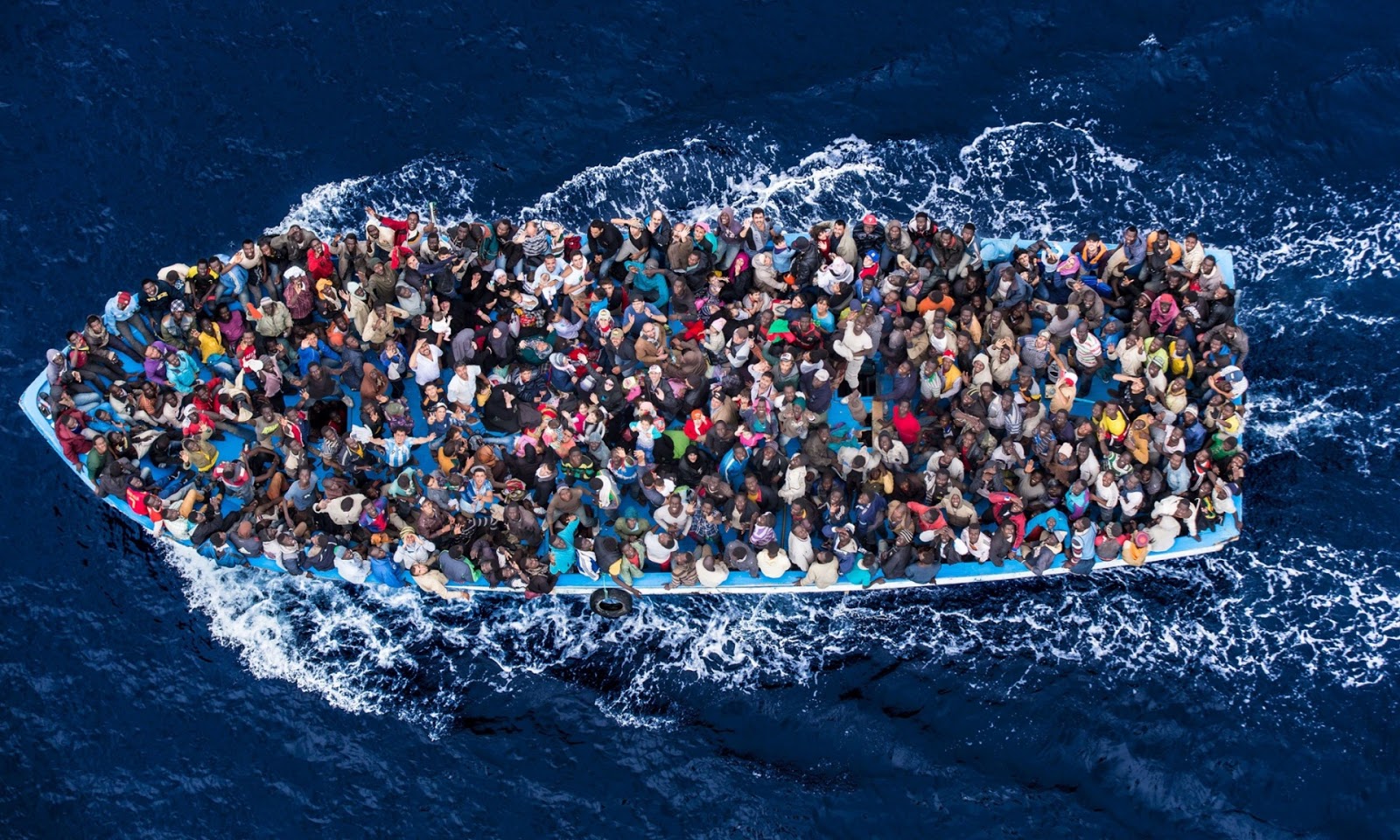
En 2017, la Libye et l'Algérie sont passées sous le contrôle de Daesh qui en a fait le Califat du Ponant. Profitant du désarmement moral des Européens, les islamistes décident de l'envoi, par vagues successives, de 4 millions de migrants vers l’Europe et plus spécifiquement vers la France, nouveau dâr al-harb[1]. A bord de certaines embarcations, ont pris place des kamikazes chargés de couler les navires portant secours aux forceurs de frontières et cela, afin de déstabiliser encore davantage l'ennemi. L'opération est baptisée Prophète des mers.

Face à cette guerre navale asymétrique, les rares frégates ultra-sophistiquées de la marine française, taillées pour la lutte de haute mer, sont débordées. A l’inverse les navires garde-côtes qui auraient dû être construits depuis longtemps afin de sécuriser les frontières maritimes, manquent cruellement. Faute de prise en compte par les autorités politiques des enjeux stratégiques vitaux que constitue la frontière maritime méditerranéenne, la marine française est impuissante.

Au sud, harcelé le long d'un front ouvert depuis la Mauritanie à l'ouest jusqu'au Soudan à l'est, le dispositif Barkhane s'est replié sur le Burkina Faso afin de protéger la Côte d'Ivoire. Quant aux dernières réserves opérationnelles françaises disponibles après des années de déflation des effectifs, elles ont été positionnées autour de N'Djamena afin de couvrir le Cameroun. Boko Haram, un moment affaibli, a en effet refait ses forces grâce à des cadres venus de Libye, d'Algérie mais aussi de Syrie.

En France même, alors que se déroule la campagne présidentielle, plusieurs banlieues se sont soulevées à la suite de contrôles d'identité ayant dégénéré. En raison de la dissolution de plusieurs escadrons de gendarmes mobiles opérée sous la présidence de Nicolas Sarkozy, les forces de l'ordre qui n'ont pas les effectifs suffisants pour intervenir doivent se contenter de boucler les périmètres insurgés. Les associations d'aide aux migrants dénoncent l' "amalgame" et leurs mots d'ordre sont abondamment relayés par les médias. Vingt cinq mille réservistes de la gendarmerie sont rappelés cependant qu’ un peu partout, face à la passivité de l'Etat, se constituent clandestinement des groupes de résistants prêts à passer à l'action. La France est au bord de la guerre civile.

Comment en est-on arrivé là ? Entre 2011 et 2017, conduite au chaos par l'intervention franco-otanienne, la Libye est passée de la plus totale anarchie au califat, Daesh ayant réussi à y engerber les milices. Quant au général Haftar, sur lequel la "communauté internationale" comptait pour constituer une troisième force, il n'a pas pesé lourd face aux jihadistes. Impuissante, l'Egypte s'est illusoirement retranchée derrière un mur électronique cependant que, quotidiennement, des attentats y entretiennent un climat de guerre civile. Quant à la Tunisie, une artificielle quiétude y règne car lesjihadistes qui ont besoin d'un pays-relais, se gardent de trop y tendre la situation, se contentant d'y maintenir une pression calculée. Après plus d'un demi-siècle de gabegie, de détournements de fonds publics, de népotisme et de récriminations à l'égard de l'ancienne puissance coloniale, l'Algérie, cible principale des islamistes de toutes obédiences depuis la décennie 1990, a, quant à elle, basculé dans l'islamisme à la suite d'émeutes urbaines déclenchées par l'effondrement de la rente pétrolière.

Tel est le scénario auquel nous pourrions nous attendre à la veille de l'élection présidentielle française. Avec une Marine sans moyens, mais en première ligne face à la déferlante venue du sud, une Armée de terre aux effectifs rognés et isolée sur le rideau défensif sahélien et une Gendarmerie démotivée en raison de son alignement sur le modèle policier.

Bernard Lugan
07/08/2015

[1] Pays des infidèles contre lequel les musulmans sont en guerre jusqu'à la conversion de ces derniers.


"Le temps des mille ans s'achève. Voilà que sortent les nations qui sont aux quatre coins de la terre et qui égalent en nombre le sable de la mer. Elles partiront en expédition sur la surface de la terre, elles investiront le camp des Saints et la Ville bien aimée". APOCALYPSE XXème chant.


lundi 3 août 2015

Qui veut vivre en Russie doit s'intégrer! (prés. Vladimir Poutine) - et chez nous?...

Que du bon sens! Hélas, aucun de nos politiciens n'arrive à sa cheville. Pourquoi approuvons-nous ce grand homme et votons-nous pour notre médiocratie???
------------------------

"Nous devons créer les conditions pour que les immigrants puissent s'intégrer normalement dans notre société, apprendre la langue russe, et bien entendu, respecter nos culture et traditions, et se soumettre à la législation russe. A cet égard, je crois que la décision de rendre obligatoire l'apprentissage du russe et de le vérifier par des examens est bien fondée. Pour cela, nous aurons besoin d'accomplir un travail de réorganisation majeur et d'introduire les amendements législatifs correspondants."
Vladimir Poutine, président de la Fédération de Russie, janvier 2012, réunion du Comité Fédéral pour l'Immigration

source originale russe traduite par leurs soins en anglais:
http://web.archive.org/web/20130501091111/http://government.ru/eng/docs/17877/
"We must create the conditions for immigrants to normally integrate into our society, learn Russian and, of course, respect our culture and traditions and abide by Russian law. In this regard, I believe that the decision to make learning the Russian language compulsory and administer exams is well grounded. To do so, we will need to carry out major organisational work and introduce corresponding legislative amendments."
Vladimir Putin, president of Russian Federation, in a speech of January 2012 meeting of the Board of the Federal Migration.

jeudi 2 juillet 2015

Le nationalisme et le patriotisme ne sont PAS la même chose. Le premier est toujours source de guerres.


source du dessin:
https://twitter.com/tomgauld/status/571994690289061888

"Nationalism is a silly cock crowing on his own dunghill."
Richard Aldington
"Le nationalisme, c'est un stupide coq qui chante sur son propre tas de fumier"

vendredi 12 juin 2015

Quand des peuples ont décidé de ne pas se battre pour survivre

Alors c'est le suicide d'une civilisation, et le retour à la barbarie...


vendredi 8 mai 2015

De nouveau envahir la Russie "pour la démocratie"?

Quelques siècles de tentatives sont là pour nous le rappeler : tous les peuples qui ont tenté de soumettre la Russie ont, tôt ou tard, été flanqués à la porte. C'est un peuple fier, parfois paradoxal voire paroxismique, mais droit dans ses bottes, fidèle à ses racines, sa culture et sa religion.
Et qui n'acceptera jamais de faire comme notre Occident dégénéré, et donc jamais de se soumettre à Washington pour devenir un laquais, un client de l'industrie yanki.
Si ils parviennent à leurs fins, nos prétendus élus qui veulent la guerre contre la Russie pour faire plaisir à leur maître de Wall Street vont juste réussir à nous nous attirer les missiles de légitime défense et riposte russe sur la tête. Si les USA veulent la guerre, qu'ils aillent la faire SEULS. Comme disait le général de Gaule, l'Europe, c'est de l'Atlantique à l'Oural - la Russie ce sont nos cousins, on n'a pas besoin d'une guerre fratricide.


Кто с мечом к нам придет - от меча и погибнет!
"Celui qui vient chez nous avec l'épée, par l'épée périra!"
Grand Prince Alexandre Nevski, vainqueur des armées occidentales.

lundi 20 avril 2015

Occident : les chrétiens ne sont plus les bienvenus. A quand leur interdiction légale?

En France & Angleterre c'est pour bientôt! Et ne croyons pas que la mort violente pour les chrétiens soit une spécialité musulmane : en 1905, en France, il ne faisait pas bon être catholique... et nos actuels dirigeants font souvent référence à cette époque pour s'en inspirer. Alors imaginer que demain, on verrait un retour de quelque chose du genre de ces "Colonnes Infernales" qui ont massacré un million de Vendéens "parce que catholiques", est-ce vraiment de la science-fiction?


mardi 10 mars 2015

ce qui fait l’Histoire, selon notre conception occidentale et chrétienne (Bastien-Thiry)

"Il n’y a pas de sens de l’Histoire, il n’y a pas de vent de l’Histoire car ce qui fait l’Histoire, selon notre conception occidentale et chrétienne qui est vérifiée par tous les faits historiques, c’est la volonté des hommes, c’est l’intelligence des hommes, ce sont leurs passions, bonnes ou mauvaises."

"Le danger que court actuellement ce pays ne vient pas d'un risque de destruction physique ou matérielle : il est plus subtil et plus profond car il peut aboutir à la destruction de valeurs humaines, morales et spirituelles qui constituent le patrimoine français . Ce patrimoine provient d'un héritage qui est à la fois grec, latin, occidental et chrétien et repose sur une conception précise de la liberté et de la dignité de l'homme et des collectivités humaines et sur la mise en application de principes fondamentaux qui sont la recherche et le souci de la justice, le respect de la vérité et de la parole donnée et la solidarité fraternelle entre tous ceux qui appartiennent à la même collectivité nationale . Nous croyons qu'on ne viole pas impunément et cyniquement ces différents principes sans mettre en péril de mort, dans son esprit et dans son âme, la nation tout entière."

Ces lignes ont été écrites par le Colonel Jean-Marie Bastien-Thiry, fusillé le 11 mars 1963 au Fort d’Ivry. Il marcha vers le peloton chapelet à la main, laissant derrière lui l’image d’un héros français et chrétien qui a porté jusqu’au bout l’idéal du sacrifice.

vendredi 10 octobre 2014

Guerre contre l'EIIL / ISIS : soutenons nos troupes là-bas.. pour pas que ça se répande ici...

Soit nous soutenons l'effort militaire là-bas où c'est né...


soit, vu que l'islam sunnite militant est très présent en France, Angleterre, Belgique, Pays-Bas, etc, nous aurons à recommencer ce que nos ancêtres jadis ont dû faire ici... et l'Histoire repasse toujours les plats aux peuples qui refusent d'en tirer les leçons!


Poitiers 732 - N'OUBLIEZ JAMAIS!

mercredi 4 juin 2014

Ukraine ou la désinformation étatique massive.. chez nous!

Passez outre la censure officielle, informez-vous et informez autour de vous!

http://www.les-crises.fr/ukraine/


lundi 24 mars 2014

Irak, Lybie, Serbie, et maintenant Ukraine : les guerres pétrolières des USA et l'inféodation de l'OTAN

A l'Ouest, rien de neuf.. A Belgrade, ce 25 mars 2014, commémoration des bombardements OTAN d'il y a 15 ans. La vérité n'a pas encore été avouée par les responsables auprès des foules d'Europe et d'Amérique du Nord qui ont stupidement approuvé ces crimes contre l'humanité. Quand le sera-t'elle? L'ancien chef des forces de l'ONU à Sarajevo, une fois délié de son devoir de réserve grâce à sa mise à la retraite, lui, a parlé. Et il vaut la peine de le lire, et de l'écouter. Et de ne plus se laisser berner par nos dirigeants qui sont au service des pétroliers nord-américains.
==================================================


http://www.globalresearch.ca/articles/MAC404A.html

We bombed the wrong side?

by Lewis MacKenzie


National Post, 6 April 2004

www.globalresearch.ca   11 April 2004
Five years ago our television screens were dominated by pictures of Kosovo-Albanian refugees escaping across Kosovo's borders to the sanctuaries of Macedonia and Albania. Shrill reports indicated that Slobodan Milosevic's security forces were conducting a campaign of genocide and that at least 100,000 Kosovo-Albanians had been exterminated and buried in mass graves throughout the Serbian province. NATO sprung into action and, in spite of the fact no member nation of the alliance was threatened, commenced bombing not only Kosovo, but the infrastructure and population of Serbia itself -- without the authorizing United Nations resolution so revered by Canadian leadership, past and present.
Those of us who warned that the West was being sucked in on the side of an extremist, militant, Kosovo-Albanian independence movement were dismissed as appeasers. The fact that the lead organization spearheading the fight for independence, the Kosovo Liberation Army (KLA), was universally designated a terrorist organization and known to be receiving support from Osama bin Laden's al-Qaeda was conveniently ignored.
The recent dearth of news in the North American media regarding the increase in violence in Kosovo compared to the comprehensive coverage in the European press strongly suggests that we Canadians don't like to admit it when we are wrong. On the contrary, selected news clips on this side of the ocean continue to reinforce the popular spin that those dastardly Serbs are at it again.
A case in point was the latest crisis that exploded on March 15. The media reported that four Albanian boys had been chased into the river Ibar in Mitrovica by at least two Serbs and a dog (the dog's ethnic affiliation was not reported).Three of the boys drowned and one escaped to the other side. Immediately, thousands of Albanians mobilized and concentrated in the area of the divided city. Attacks on Serbs took place throughout the province resulting in an estimated 30 killed and 600 wounded. Thirty Serbian Christian Orthodox churches and monasteries were destroyed, more than 300 homes were burnt to the ground and six Serbian villages cleansed of their occupants. One hundred and fifty international peacekeepers were injured.
Totally ignored in North America were the numerous statements from impartial sources that said there was no incident between the Serbs, the dog and the Albanian boys. NATO Police spokesman Derek Chappell stated on March 16 that it was "definitely not true" that the boys had been chased into the river by Serbs. Chappell went on to say that the surviving boy had told his parents that they had entered the river alone and that three of his friends had been swept away by the current. Admiral Gregory Johnson, the overall NATO commander, further stated that the ensuing clashes were "orchestrated and well-planned ethnic cleansing" by the Kosovo-Albanians. Those Serbs forced to leave joined the 200,000 who had been cleansed from the province since NATO's "humanitarian" bombing in 1999. The '"cleansees" have become very effective "cleansers."
In the same week a number of individuals posing as Serbs ambushed and killed a UN policeman and his local police partner. During the firefight one of them was wounded which caused an immediate switch from Serbian to Albanian as he screamed, "I've been hit"! The UN pursued the attackers and tracked them to an Albanian-run farm where they discovered weapons and the wounded Albanian who had died from his wounds. Four Albanians were arrested. Once again, the ambush had been reported in the United States but not the follow-up which clearly indicated yet another orchestrated provocation by the Albanian terrorists.
Kosovo is administered by the UN, the very organization many Canadians have indicated they would like to see take over from the United States in Iraq. The fact the UN cannot order its civilian employees to go or stay anywhere -- they have to volunteer -- combined with recent history that saw the UN abandon Iraq after a single brutal attack on their compound in Baghdad and the reality that Kosovo, under the organization's administration, is a basket case, disqualifies it from consideration for such a role.
Since the NATO/UN intervention in 1999, Kosovo has become the crime capital of Europe. The sex slave trade is flourishing. The province has become an invaluable transit point for drugs en route to Europe and North America. Ironically, the majority of the drugs come from another state "liberated" by the West, Afghanistan. Members of the demobilized, but not eliminated, KLA are intimately involved in organized crime and the government. The UN police arrest a small percentage of those involved in criminal activities and turn them over to a judiciary with a revolving door that responds to bribes and coercion.
The objective of the Albanians is to purge all non-Albanians, including the international community's representatives, from Kosovo and ultimately link up with mother Albania thereby achieving the goal of "Greater Albania." The campaign started with their attacks on Serbian security forces in the early 1990s and they were successful in turning Milosevic's heavy-handed response into worldwide sympathy for their cause. There was no genocide as claimed by the West -- the 100,000 allegedly buried in mass graves turned out to be around 2,000, of all ethnic origins, including those killed in combat during the war itself.
The Kosovo-Albanians have played us like a Stradivarius. We have subsidized and indirectly supported their violent campaign for an ethnically pure and independent Kosovo. We have never blamed them for being the perpetrators of the violence in the early '90s and we continue to portray them as the designated victim today in spite of evidence to the contrary. When they achieve independence with the help of our tax dollars combined with those of bin Laden and al-Qaeda, just consider the message of encouragement this sends to other terrorist-supported independence movements around the world.
Funny how we just keep digging the hole deeper!

Maj-Gen. Lewis MacKenzie, now retired, commanded UN troops during the Bosnian civil war of 1992.


=================================


===================================


http://peacemagazine.org/archive/v14n6p16.htm

A Peacekeeping General Recalls Sarajevo

By Susan McClelland (interviewer)
SUSAN MCCLELLAND: In the former Yugoslavia, the United Nations was confronted with many ideological questions including looking at its original mandate of not interfering in civil war. Do you think this will spawn a review of the U.N.'s original mandate?
LEWIS MACKENZIE: The United Nations looks at its mandate every time a civil conflict occurs. Yet the unchanging structure in the Security Council usually dictates that, no, they won't get involved. For example, in spite of anarchy in Somalia, this alone wasn't justification for the U.N. to go in. The justification was the movement of refugees, which was viewed as a threat to international peace and security. The U.N. has been extremely hesitant to impose a solution on an internal problem. We will never see a peacekeeping mission in the home turf of a permanent five member. Only in Russia, and they invited the U.N into Georgia. But what would they do if the Catholics called for intervention in Northern Ireland? If the French Canadians cried out for help, would the Security Council send in an intervention force? I think not. As for Bosnia, some said, "Put a fence around the country. Give the warring parties all the weapons they want and go in, two years later, with a plan to rebuild." The U.N. ethically cannot accept this as a solution and therefore they did what they could within their own rules. To change the rules could set a dangerous precedent.
MCCLELLAND: You supported the United States's delayed involvement in the war. Can you explain why?
MACKENZIE: The Duke of Wellington said that big countries don't fight small wars. They would risk their credibility. Right now the United States needs to be available for the "biggies" if they get out of hand - like North Korea, Russia, China, and Iraq, for example. The U.S. risks their credibility in getting involved in small wars, just like what happened in Vietnam. Besides, the former Yugoslavia was in the European theater and for the Europeans to say, "We can't put 40,000 troops into Bosnia unless the Americans come along," I say, what a condemnation of NATO! What have we been doing for the last 40 years if all these countries, less America, can't go into Bosnia and sort this thing out? It was very much the Europeans not wanting America to leave NATO. This was the bigger issue. And that is the trouble when you get into the Security Council. There is always a bigger issue, that being the national self interests of the Permanent Five members, which rarely coincide. And, in this case, the bigger issue - even the early recognition of Croatia and Slovenia by Germany and the E.C. which started this thing - was driven by the Maastricht Treaty, which was being debated at the time. As usual, the former Yugoslavia became the pawn. Nobody anticipated that the situation would turn out the way it did.
Right from the beginning, with the Bosnian president Izetbegovic, I was adamant that the reason his forces were screwing up the cease-fires and becoming as much a thorn in my side as the Bosnian Serbs was that they expected the U.S. cavalry to come over the hill and save them. And the United States was not going to come because it was not in their self interest to do so. Nonetheless, Izetbegovic's forces played the game very well. It was expensive for them in life and limb. But they knew that ultimately, with the proper public relations representation, the Americans would be forced to come. And sure enough they did. So to go back to the original question, the potential of U.S. involvement was the carrot that kept this thing going.
MCCLELLAND: There are some who maintain that the situation in the former Yugoslavia, and as seen in Kosovo today, has the potential to move down into Albania, Macedonia, Greece and Turkey. What is your opinion on this?
MACKENZIE: Certainly the potential was there. Over the last month, however, there has been no impact whatsoever into the surrounding areas, outside of Kosovo. I spent a fair time with the president of Macedonia, who was even surer that his population would be seriously affected. He spent a great deal of money on his internal police force in preparation. But nothing has happened outside the region. That is encouraging.
It is important to note that the focus initially in Kosovo was on Milosovic. He is still thought of by many as "the Butcher of the Balkans." Well, one has to remember that Milosovic was a contender for the Nobel Peace Prize after Dayton. What is being done in Kosovo is a result of a liberation group, the Kosova Liberation Army, who are defined as terrorists in CIA files. This liberation group decided to internationalize themselves and their struggle, and they knew from recent history in the Balkans that if they started to kill some Serb policemen, the Serbs would do what they normally do - over-react and try and sort out the problem by using heavy weapons like artillery on civilian targets. This gets a lot of attention from the international community but when people sat back and looked at this thing in the cold hard light of day, they saw that this was an internal problem and the people causing the problem are not all that nice either. So no, I don't see the conflict in Kosovo spreading. I don't know if I would have had the same answer a couple of months ago.
MCCLELLAND: There are many theories as to the spark that made conflict in the former Yugoslavia inevitable. What is your theory?
MACKENZIE: A lot of people will say the spark was early recognition by the E.C. led by Germany of Croatia. I think, however, that the spark could well have been just after recognition, in the Krajina, among all the sniping and ambushing. One incident involved a pizza salesman from Ottawa who was the Minister of National Defence for Tudjman and who allegedly led a patrol that killed several Serbians at a check point. He too knew that the Serbs, with their overwhelming superiority in weapons, would respond. So I would say that it is somewhere in the early tensions between Croatia and Serbia that the hostilities began. Croatia saw its new flag, for example, as being this wonderful historical and religious symbol. The Serbs saw the red and white checkerboard as a reminder of when the Croats were aligned to the Nazis during World War II. There is fantastic polarization in the Balkans. And that early period, while there was conflict in the Krajina, was when the real war began. People in the area around southern Croatia and the Krajina bore a lot of the responsibility for starting the war and Serbia must bear serious responsibility for expanding it to a horrific level.
MCCLELLAND: You mentioned in your book about a New York Times article that inaccurately portrayed the hostilities. Could you comment on the reporting that was done during the war.
MACKENZIE: This is probably the hottest topic of the conflict. But I don't hold the journalists responsible. Their reporting was driven by technology. Before the war in Bosnia and, dare I say the Gulf, a reporter would put something together, which would be sent back to an office in London, Atlanta, or wherever, and staff would take this reporting and mix it with that from other reporters, for there was no shortage of information coming out of the war. Then the story went out to the public and the public saw it in some context. In Bosnia, the reporting was live, and therefore without context.
Another problem involved the freelancers. In the beginning Martin Bell of the BBC brought all the journalists together and said, "The best way for us to keep from getting killed is to send out teams and pool our work." Then the freelancers moved in. They came in brash and as stupid as anything and they would go out and get right in the middle of a conflict and send these pictures back home. What happened is that the head offices phoned Martin and said, "You've got to get pictures like these." Christiane Amanpour from CNN was being told, "You've got to get out there. We are being wiped out by the other channels." It isn't that what was being shown were fabrications. It was the fact that only a tiny bit of the overall situation was being reported. Frequently I would be in the middle of a crisis situation where people were being killed and someone would be recording live. The footage was going up to a satellite and telecast directly onto someone's television screen. How do you put that into context? Talk about "Wag the Dog"! These reporters created tremendous emotions based on 1/1,000 of what was going on. There was stuff that was every bit as bad, if not worse, in the rest of the country. But the whole world was focused in on Sarajevo. Why? Because the media was living in the basement of the Sarajevo Holiday Inn. They were living on one side of the conflict so they naturally recorded the war from one side of the conflict. There should have been reporting from all sides. The reporting had a tremendous impact on national foreign policies around the world.
MCCLELLAND: You talked in your book about the market bombings. In light of some reports that question who was responsible for the massacres, have you changed your own opinion?
MACKENZIE: My response to this issue is part of the reason why I have been frequently accused of being pro-Serbian. My book says quite clearly that we will never know who did the breadline massacre. People say I am accusing the Bosnians of doing it to themselves. And I say, no, absolutely not! The people who had the most to gain from any number of atrocities in Sarajevo were the people who were selling eggs on the black market for five marks each. It was the criminal element that was interested in keeping the war going because they were getting really rich. So there was a tremendous amount of self interest for them to do this. Sure there was also self interest on the part of the Bosnian government to generate sympathy. It wouldn't have been the first time in history that events were staged to drive policy. But really, when I say it could have been the Bosnian side, that does not mean it was government policy; it could have been one of many criminal elements, a freelance unit or, equally, it could been the Bosnian Serb side.
MCCLELLAND: You mentioned being accused of being pro-Serbian. Would you like to address some of the allegations made against you?
MACKENZIE: It started after my appearance in front of the U.S. senate and congressional committees in Washington. Also, to a certain extent, in Sarajevo because I was seeing Karadzic on a daily basis. Izetbegovic was livid because he saw me representing the international community and he felt that I should be helping him because he represented a country that was a member of the U.N. On one occasion I said I wouldn't go and see Karadzic, even though my mandate from the Security Council was to maintain contact with both sides in the conflict and use my good offices to do what I could to reach some sort of accommodation. Izetbegovic responded by saying, "OK, you can go and see Karadzic," and he subsequently explained why to his people on TV. But nobody had television because the power was out and I was therefore condemned for dealing with "the aggressor."
Then accusations started to come out that my wife is a Serb - she is a McKinnon, of Scottish descent. My men were also being threatened with death because they worked for me, which is one of the reasons I left. But when I came home, appeared in front of the U.S. Senate and said, "America, don't get involved," that's when the allegations started, big time.
The major allegation, fortunately, has been exposed by a German reporter as part of the Herak fabrication. Herak was a Bosnian Serb soldier who had been captured by the Bosnian government. He said in an interview with John Burns, a Canadian Pulitzer Prize winner with The New York Times, that General MacKenzie would come over to Sonya's Cafe in northern Sarajevo and pick up Muslim girls, who would subsequently be found dead with their throats cut. Burns asked him how he knew it was me. And he responded by saying he recognized me from television. Herak said I was wearing three gold stars and Burns knew that we don't wear stars in Canada. Herak also said the incident took place around the middle of August and Burns knew I had left on the first of August.
Burns, however, turns to the government representative there at the time and says, this is obviously not true and don't let the MacKenzie aspect of the story get out for if it does it will ruin the credibility of the rest of the story I am writing about Herak.
The story about me broke about 48 hours later when the Bosnia judiciary said they were assigning a lawyer and charging me with war crimes. At that time, Burns was back in the U.K. and called me. He said that he was absolutely horrified that this story would get out because it would erode the credibility of the article he was writing. Burns later won a Pulitzer prize for his article on Herak.
The Canadian government, myself, and the military decided to take a low profile on the allegations because the North American media refused to carry the story. But the story broke on the day of the Islamic conference in Riyadh, Saudi Arabia when Izetbegovic arrived there.
Sonya's Cafe is where the Serbians were allegedly keeping prisoners of war. During my time there, which was at the height of the war in the early days, we couldn't even get to that part of town. Not only that, we were alleged to have shown up in jeeps. The U.N. didn't have jeeps.Yet the real convincing piece of evidence for the people of Sarajevo was a photograph taken on my last day there, which was July 31. Four secretaries from my headquarters came in to see me. I had gotten them out when the war started - one of them had a child - so they were grateful because I had overruled a civilian U.N. guy who said they couldn't leave Sarajevo. They returned shortly after the U.N. came back to Sarajevo. They asked if they could have their picture taken with me. I put my arms around the four of them. They were all crying.
I guess it was about two months later, a Canadian doctor came back from Sarajevo. He told me that a picture was being circulated around Sarajevo of four crying girls with me in the middle. People are saying that these are the girls I raped and murdered on my last day there. When I went back to do the documentary, three of the same girls met me when I arrived at Sarajevo airport.
Nevertheless, these allegations are still brought up in international conferences - particularly German or Islamic ones. I went to my lawyer and asked how I could deal with this. If I am a war criminal than let's get this out. Let me go to The Hague and testify. The bit that really bothers me is that Canada - such a generous nation and considering all the money we have given for reconstruction in Bosnia - to the best of knowledge the Canadian ambassador in Sarajevo has never protested or asked for a withdrawal of the charges.
Subsequently, the entire Herak thing, including my alleged role, was revealed as a fabrication. It was a little show put on to elicit sympathy. The four people I allegedly killed have all been found alive. If any of this was true - even one percent - it would have been on television. I had 32 of the top journalists living in my headquarters in Sarajevo. I went nowhere without a television camera in tow. So if I had gone to Sonya's Cafe or anywhere else, ten television journalists would have come with me.
I inadvertently gave my accusers more fuel for the fire a few months after my return from Sarejevo. I was responsible for speaking engagements - sometimes three a day.
I spoke to the Heritage Foundation in Washington and a few weeks later, I was informed that the event was partially subsidized by a Serbian lobby group. I had no idea at the time the contract was signed so I gave the money, $15,000, to AIDS research. Needless to say, my critics took this as confirmation of my alleged pro-Serbian stance.
MCCLELLAND: The majority of Canadians don't like to admit the parallels between the former Yugoslav a and things that have and are happening in Canada. On the political side, do you see parallels between, say, Canada taking the issue of secession to the Supreme Court and lessons we have learned from Yugoslavia?
MACKENZIE: We are the world's industrial-strength standard of compassion, tolerance, and compromise, although we don't often give ourselves credit for this. Other countries give us the credit. I have said in many presentations that if we fail at this, if secession in this country degenerates into violence and civil conflict, you can imagine the message that it will send to the rest of the world. If Canada can't sort out this problem, then my God, what hope is there for the rest of the world?
MCCLELLAND: What lessons can the world learn from Yugoslavia?
MACKENZIE: As for actual peacekeeping operations in the Balkans, the American clandestine intervention which armed the Croats and trained them to achieve success on the ground in the Krajina and Bosnia stopped the war for now. The question is, for the long term will it be successful? I think a bad lesson that has been derived from that particular experience is that an awful lot of people look to air strikes to solve problems. In Yugoslavia, they gave the appearance of driving the people to Dayton, where in fact they didn't. It was the changing situation on the ground due to the Croatian offensive and Milosovic's lack of response that took the delegates to Dayton.
MCCLELLAND: One of the arguments you hear today as a result of the Balkan experience is whether military personnel make the best peacekeepers. Some question how a soldier, trained for war, can go into a country with a mandate to preserve peace. Some soldiers in the U.S. military say that peacekeeping is eroding and weakening the warrior ethic. What are your comments on this?
MACKENZIE: I get asked this question probably a dozen times a year by American audiences, especially military audi- ences. For many years I answered no. Peacekeeping does not erode the warrior ethic. Yet my answer these days is that there is a danger of just that. But it is not in the military. The danger is in the mind of the citizens of the country the military represents. How many times have you heard Canada described as a peacekeeping nation? We have probably killed more enemy per capita than any other country in the last century - in World War I, II, and Korea - yet we still see ourselves as a purely peacekeeping nation. Therefore, when it comes to dangerous peace operations, we do what we did in the Gulf War - we say to the U.N.,"We'll give you our sons and daughters but make sure nobody gets hurt." We kept our sailors out in the Persian Gulf, far away from the land theater. We sent F18s but we only had them fly into Iraq on very rare occasions. The rest of the time our planes just circled around our ships, which was the safest thing they could do. That was under our government's direction. So in the decision making of the government and the minds of the population, yes, peacekeeping missions erode the warrior ethic. As a result, our soldiers on the ground work very much handcuffed and their reputation with allies is suffering.
But as far as the soldiers themselves go, no, I don't believe they are weakened because of peacekeeping duty. Why? Because a peacekeeper may be stopping traffic on one day and on the next, fighting his or her way out of the situation. The escalation can be so dramatic and occur so rapidly that peacekeeping must be a soldier's responsibility. It is also important to note that peacekeeping is a bit of a macho game. If I am dealing with a soldier on the Serb, Muslim, or Croatian side there is a certain amount of respect between us for what we do. If all of sudden I showed up as a sort of constabulary conciliator from Canada, having just been issued a uniform and given a weapon, there is not the same rapport. Soldier peacekeepers can sit down with the Israelis, the Syrians, and the Iraqis and talk tactical professional arrangements for cease-fires.
MCCLELLAND: What do you think is the greatest threat to world security right now?
MACKENZIE: Civil war. Internal civil conflict. There are 43 to 44 civil conflicts going on as we speak and few of them cross recognized borders. A lot of those borders, particularly in Africa, were drawn by politicians after World War I and World War II. And a lot of those borders don't make sense today. I absolutely agree that the U.N. needs to look at its mandate as a result. Maybe there are other ways than U.N. intervention to deal with civil conflict. Maybe there are other ways to bring pressure on the belligerents. But first you have to recognize civil conflict. I drove Izetbegovic, the European community, and the U.N. mad for the first couple months of the war because they didn't want us talking to the Bosnian Serbs. I am a simple soldier saying "these guys are half or more of the problem." Michael Ignatieff said it best: At the end of the Cold War, the two teams representing the East-West conflict self-destructed. Those teams had client states, so everybody knew what side they were on. And when the Cold War pulled the Iron Curtain down, a lot of people, a lot of countries, needed a security blanket, be it color, religion, territory or a combination of these things. Everyone needs to feel part of a group. People are sorting out their groups now and they are doing it by way of conflict. That is the challenge the future faces.
Susan McClelland is an Ottawa journalist.


=================================

http://www.fantompowa.net/Flame/bosnia_sarajevo.htm

Who was responsible for the market place massacres in Sarajevo ?
Seán Mac Mathúna
Civilians killed by bomb attack in Sarajevo market Picture by Rickard Larma - SIPA
"A few days ago Mr. Boutros Ghali informed me that the projectile which hit the Markale marketplace in Sarajevo was an act of (Bosnian) Muslim provocation". President Mitterrand of France, 1995
Open military confrontation in Bosnia-Herzegovina ended with the signing of the Dayton Peace Agreement on 14th December 1995. The conflict had resulted in more than 160,000 deaths, and 2.5 million refugees and displaced persons. Not long before, the United Nations (UN) had ordered the first combat units from its rapid reaction force into Sarajevo, after after Serb rebels killed two French peacekeepers. Three Bosnian Serb shells had hit the French and Danish areas of a U.N. compound in Zetra, north of Sarajevo's centre killing a French peacekeeper and wounding another French soldier and a Dane. A half-hour later, another French peacekeeper was killed and two wounded, one seriously, when a U.N. convoy was targeted by Serbs in the suburb of Butmir. The deaths brought the number of French dead to 42 since the Bosnian war began in April 1992 - and not all of them were killed by the Bosnian Serbs, a number of them were also killed in crossfire or deliberately by the forces of the Bosnian government.
Not only did the UN get tough with the Bosnian Serbs - whose political and military leaders have now been charged with war crimes - in 1995, NATO had become directly involved when when they ordered air strikes against the Bosnian Serbs. These attacks had been preceded by a series of barbaric attacks against civilians in the Markele market in Sarajevo, all of which were assumed to be the work of the Serb army laying siege to Sarajevo.
There were three attacks on the markets, all of which were blamed on them: the first on 27th May 1992, killed 16 people, the second on 5th February 1994 killed 68, and the third on 28th August 1995, killed 37. The last attack is the most significant, as it has been widely alleged, by members of the UN Mission in Bosnia, UN Commanding officers and of course, predictably, the Bosnian Serbs themselves, that this one in particular was staged by elements within the Bosnian government to provide the pretext for NATO military involvement in the war. In subsequent attacks, bombs and bullets used by the NATO jets used Depleted Uranium (DU) which is now estimated to have claimed the lives of some Serb 300 civilians who lived in the vicinity of the bases hit by NATO, according to reports that surfaced in 2001. What evidence is there for the claims that the Bosnian government carried out these attacks ?

The first attack in 1992

The first of three attacks happened on 27th May 1992 when 16 people killed in a "mortar attack" on a bread queue in Vase Miskina street in Sarajevo. As The Independent (22nd August 1992) noted, the televised scenes of civilians cut to pieces by an explosion as they queued for bread horrified international public opinion, and added growing pressure for NATO to "intervene" in the civil war against the Bosnian Serbs. Vivid footage showed dead bodies littering the street and "terrified crying people sitting on the pavement in pools of blood". The attacks came shortly before a meeting by European Union ambassadors to consider imposing sanctions on the Federal Republic of Yugoslavia. UN officials from the start were "suspicious about the circumstances but would not go public with their thoughts without jeopardising the UN mission" in Bosnia. Classified reports given to the commander of the UN peace keepers, General Satish Nambiar, concluded that it was likely that the army of the Bosnian government in Sarajevo carried out the attack. In fact, they were reported to believe it wasn't a mortar attack at all but a "command-detonated explosion - probably in a can". The impact mark left by the "mortar" on the market square floor was nowhere "near as large as we came to expect with a mortar round lading on a paved surface". This is also supported by another UN commander in Bosnia, General Michael Rose of the British army, who according to his book Dispatch the Bosnian government in Sarajevo shelled their own people to get a military response by NATO against the Bosnian Serbs (The Observer, 28th March 1999). NATO launched air strikes against the Bosnian Serbs as a result of this attack.
According to The Independent, United Nations (UN) officials and senior Western military officers believe that the attack in 1992 was carried out by the Bosnian government, "To win world sympathy and trigger intervention". This was also expressed in confidential reports circulating at the UN headquarters in New York, and in classified briefings to US policy makers in Washington, according to the British newspaper. The attack on the bread queue in Vase Miskina Street also led to draconian sanctions against Yugoslavia imposed by the Security Council (resolution 757) on 30th May 1992 (which had been preceded by Yugoslavia's expulsion from the WHO). All supplies of raw materials to the well-developed pharmaceutical industry of Yugoslavia for production of medicines were immediately suspended. The justification for blaming Yugoslavia for attacks carried out in Bosnia was based on Western intelligence disinformation that the country was directing the war on behalf of the Bosnian Serbs.

The second attack in 1994

The second attack on a market in Sarajevo happened on 5th February 1994 when a single mortar round left 68 dead and 200 wounded. Some people immediately questioned how son many civilians had been killed or wounded by one mortar bomb. Furthermore, officials from the Bosnian government did allow anyone from UNPROFOR to verify what had happened. Despite vehement denials from the Bosnian Serbs, the US news channel, CNN, immediately reported that they were responsible for the shocking carnage that the attack left, which CNN claimed was "caused by a Serb mortar bomb". The US President Bill Clinton added to this saying it was "highly likely" that the Bosnian Serbs were responsible for it.
Thus, US ambassador to the UN, Madeline Albright and the US presidential security advisor Anthony Lake, immediately called for NATO air strikes against the Bosnian Serbs. Yet there were already people claiming that even the UN itself did not suspect the Bosnian Serbs, but this appears to have been suppressed by the Western media, possibly acting under covert British and American pressure, assuming the the whole purpose of the mortar attack was to provide the pretext for NATO military involvement in the Balkans for the first time. If this is not the case, then it is certainly hinted at by the former British Foreign Secretary David Owen in his book Balkan Odyssey (Victor Gollanz, London, 1995):
"People around General Rose never tried to hide the fact that at his meeting with Bosnian Muslim leaders (President Alia Izetbegovic and General Delic) he said that he had just received some information which shows that the mortar bomb did not come from the area under Serb control but from the Muslim part of the city . . ."
However, Owen's account of the the Market square massacre in 1994 has been criticised by Noel Malcom in a review of his book in The Sunday Telegraph on 12th November 1995.
When discussing the market-place massacre in Sarajevo of February 1994, Lord Owen goes on at length about a UN investigation which concluded that the mortar shell had been fired from a Bosnian Government position. Dramatically, he confirms that General Rose put pressure on Bosnian ministers by threatening to reveal this finding, unless they did as they were told. What Lord Owen does not tell us is that a second, more thorough investigation found that the first had made mistakes in its calculations, and concluded that the shell could equally have come from the Serb side. It is surely inconceivable that Owen is unaware of this second report; yet he chooses not to mention it. Readers will have to draw their own conclusions about the overall reliability of this grotesquely vainglorious book.
But, Owen also fails to give any clear evidence as to the perpetrators of this attack - if you read his statement carefully, he is only telling us that the second investigation, although on one hand, described as "more thorough", still concluded that the shell could "equally" have come from the Serb side. This indicates to me that their is still no hard evidence that either side were responsible. Bosnian Serb and Russian claims should be treated with scepticism (as they have a vested interest, from a propaganda point-of-view, in making sure these allegations are widely circulated). But the claims of the UN and representatives of various NATO countries serving as peacekeepers should be treated as serious and worthy of investigation.
From example, On 6th June 1996, Yasushi Akashi, UN special envoy for Bosnia, told a German journalist working for DPA in New York, that there was a secret UN report accusing the Bosnian government forces of this massacre. It was claimed that this secret report was passed on to the UN Secretary General, Boutros Boutros Ghali, who did not publish it in the interest of "higher politics". Citing this UN report, B. Volker, a French journalist working for TV TF1 said that the mortar bomb was fired from Bosnian government positions. Volker also quotes the words of President Mitterrand: "A few days ago Mr. Boutros Ghali informed me that the projectile which hit the Markale marketplace in Sarajevo was an act of (Bosnian) Muslim provocation".

The third attack in 1995

The third attack, on 28th August 1995 also hit market and left 37 dead and 90 wounded. When UN issued a declaration blaming the Bosnian Serbs, it evidently ignored the report of the British and French experts as well as the assessment of the UN's artillery expert for the Sarajevo sector, a Russian colonel, A. Demurenko. Soon after the attack, NATO launched extensive air strikes against Bosnian Serb military and civilian targets. The strategy appeared pre-planned as it coincided with an joint Croat and Bosnian government offensive against the Bosnian Serbs. The attacks changed the course of the war in Bosnia as enabled NATO to enter the conflict on behalf of the Bosnian government and Croat forces. After this attack, President Yeltsin gave official credence to reports circulating in the Russian media that a "third party" was responsible for the mortar attack on the bread queue. Yeltsin said that Russia "insists" that the UN "look again" at the attacks as there was new evidence indicating that it was not the Bosnian Serb's who carried out the attack. Despite this, NATO went ahead and launched air strikes. One military adviser to the foreign ministry, General Boris Gromov, even claimed (with no evidence provided) that one of the NATO powers was involved in the mortar attack "as a provocation". Yeltsin also said:
"Why am l against the expansion of NATO ? This (mortar attack in Sarajevo) is the first sign of what might happen when NATO comes right up to the borders of the Russian Federation. Those who insist on the expansion of NATO are making a major political mistake. The flame of war would burst out across the whole of Europe" (The Guardian, 9th September 1995).
The Russians and Bosnian Serbs have claimed that the third attack was prepared in advance over many months by "certain" Western secret services (probably including the CIA), and that Bosnian government troops under the commander of the General R. Delic carried it out. The reason for this, they argue, was to provide NATO with an opportunity not only discredit the Bosnian Serbs, but to provide the pretext to use heavy air strikes on them so as to destroy their military potential. The Russian intelligence service (FSB) were said to had known about the preparation of the plan since February 1995. Then a detailed plan, allegedly called Cyclone 2, was related to a secret memorandum, signed on 10th August 1995 at the Pleso airport in Zagreb, Croatia. The memorandum was signed for the UN by the commander of the UNPROFOR forces based Croatia and Bosnia,General B. Janvier and by Admiral L. Smith for NATO. This secret memorandum was only passed on, as "secret", on 13th September 1995 to the UN Security Council, when the main destruction of Serb targets had already taken place. According to article 7 of the memorandum UNPROFOR agreed to provide all information necessary for the NATO strikes against Serb targets to achieve the maximum success.
According to the FSB, the mortar was fired from the roof of a building near the market and they further claimed that the device was not a standard mortar bomb. Another author, Y. Bodansky, the director of the Republican parliamentary task force studying terrorism and unconventional warfare (Target America, Terrorism in the US Today, S.P.I. Books, Shapolsky Publishers, New York, 1993), believed that the Bosnian Serb intelligence service knew that "something was being planned" in Sarajevo. On 26th August 1995 (two days before the second massacre) he spoke by telephone to a senior official of the Republika Srpska in the Yugoslav capital, Belgrade, who told him anxiously that once again "something terrible is being planned against the Serbs" in Sarajevo. How much of this is true, made up or just a joint FSB-Bosnian Serb disinformation campaign is hard to assess.
Another report indicating that the Bosnian Serbs were not responsible for this market place attacks was published in The Sunday Times on October 1st 1995. It claimed that British ammunition experts serving with the UN in Sarajevo had "challenged" key evidence of the attack on the bread market which not only triggered NATO attacks against the Serbs in Bosnia, but turned the tide of the war against them. According to the newspaper, the British experts:
"found no evidence that the Bosnian Serbs had fired the lethal round"
Nora Beloff, writing in her book Yugoslavia: An Avoidable War (New European Publications, London, England, 1997), also allege that "that Bosnian government arranged to kill their own people" so as to get the Bosnian Serbs blamed. She alleges the news reporter Martin Bell, now an independent MP in Britain, had known about these allegations through his contacts with British UN officers but "he ignored what they might have told him". She repeats claims, as reported in David Owen's account of the bombings, that western experts had discovered that it was the Bosnian government forces and not the Bosnian Serbs who had been behind the attack in February 1994. Allegedly, when UNPROFOR wanted the Bosnian government to participate in truce negotiations, the British commander, General Michael Rose:
"Blackmailed the Bosnian Muslim leaders into submission. He told them that unless they agreed to cooperate, he would tell the international press that he had technical expertise proving that the grenade came from the Muslim, not the Serb, side" (Beloff, p112/113).
Other attacks supposedly carried out by the Bosnian government - and blamed on the Bosnian Serbs - include:
  • 29th June 1992: Rocket attack on Sarajevo's TV station kills 5 people. Bosnian government troops implicated in this attack (The Sunday Times, October 1st 1995).
  • 17th July 1992: A "choreographed" mortar salvo, 30 seconds after British Foreign Secretary Douglas Hurd entered a building for a meeting with the Bosnian President, Alija Izetbegovic. The attack killed or wounded 10 bystanders - but not Hurd's guard of honor, who had clearly been forewarned and ducked for cover seconds before the attack.
  • 4th August 1992: Bomb attacks which were filmed by the Western film crews at a funeral of two orphans in a cemetery in Sarajevo. The attacks were blamed on the Bosnian Serbs.
  • 13th August 1992: After the Yugoslav Prime Minister Milan Panic arrives in Sarajevo airport for a meeting with Izetbegovic, a Bosnian government sniper kills US TV producer David Kaplan. The attacks disrupts the schedule of Panic, and he only manages to spend 20 minutes on the phone with Izetbegovic.
Philip Corwen, a senior member of the UN in Bosnia has recently written a book about his experience there (Dubious Mandate: A memoir of the UN in Bosnia, Summer 1995 [Duke, London, UK, 1999]):
"The French forces (the main UN armed force in Sarajevo) were continually harassed, shot at, blocked at, and threatened by Bosnian government forces . . . it was the French who pointed out that the Bosnian government was placing weapons systems next to UN facilities in order to draw fire from Serb artillery onto civilian and UN targets and thus provoke international outrage against the Serbs . .. (p178)
I recommend that readers interested in the background to the conflict in Bosnia read Corwen's book: His meticulous account shatters once and for all the "one victim - one enemy" myth promoted mainly by the Western media. For the record, l unequivocally condemn the war crimes and crimes against humanity carried out by the Bosnian Serb regime against the people of Sarajevo - whom they relentlessly bombed and shelled. The Bosnian Serb leaders Radovan Karadzic and General Ratko Mladic have been rightfully indicted by the International war crimes tribunal in the Netherlands - but why has this tribunal failed to indict Alija Izectbegovic, the Bosnian President and other senior officials of his government when there is clearly enough prima-facie evidence of their complicity in war crimes carried out by the Bosnian army ? I believe that the UN probably has ample evidence to show that the Bosnian government carried out these attacks in Sarajevo, but along with NATO, decided not to pursue charges against Bosnian government leaders for political reasons, and decided to sweep the whole story under the carpet and suppress it.

Footnote: an estimated 300 civilians killed after NATO used depleted Uranium in reprisal attacks

"Up to 300 men, women and children who lived close to the site of the (NATO) bombings in 1995 have died of cancers and leukemia over the last five years". Robert Fisk, 2001
Finally the bombings of the market place unleashed a wave of NATO air-strikes against Bosnian Serb military targets in and around Sarajevo. In these attacks, bombs and bullets used by the NATO jets used Depleted Uranium (DU) that is now estimated to have claimed the lives of some Serb 300 civilians who lived in the vicinity of the bases hit by NATO. According to Robert Fisk, writing in The Independent of Sunday on 14th January 2001, NATO subjected the Serb military bases and surrounding civilian areas to an intense bombardment between 30th August to 15th September 1995, using jets and artillery from Mount Igman just outside Sarajevo. Civilians living in the area surrounding the bases starting to begin suffering from a variety of symptoms now linked to the use of DU by NATO in Bosnia. NATO governments have so far shown little interest in helping the civilian victims of DU in either Bosnia, Yugoslavia or during the assault on Iraq in 1990.